
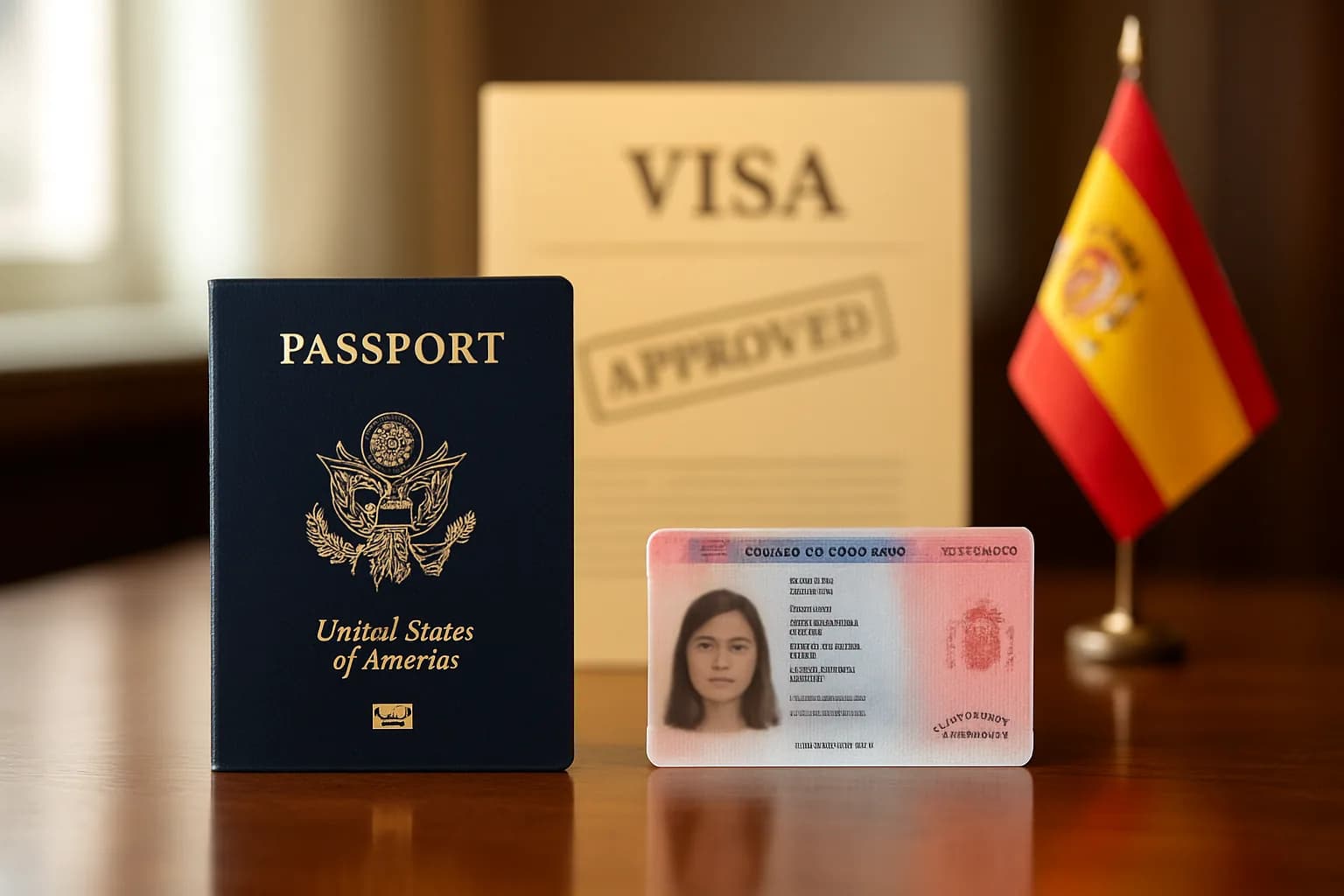
What Is the Spain Golden Visa and Who Qualifies?
The Spain Golden Visa is a residency-by-investment program that allows non-EU nationals, including US citizens, to obtain Spanish residency by making a significant investment. For US expats looking to move to Spain, particularly to the Costa del Sol, the Spain Golden Visa has been a popular route because it does not require physical residency to maintain the permit in its initial phase. However, recent changes and evolving regulations mean that US investors should carefully compare this option with other available routes before making a decision.
The program typically requires one of the following investments: a real estate purchase of at least €500,000 per applicant, a capital investment in Spanish companies, bank deposits, or government bonds. The real estate route is by far the most common among US expats, especially those buying property in Marbella, Estepona, or Fuengirola. The main advantage is that the investment can be recovered if the property is sold after obtaining residency, although the residency itself is tied to maintaining the investment during the initial period.
For US citizens, the Spain Golden Visa offers a path to live and work in Spain, but it is not the only option. Other routes such as the Non-Lucrative Visa, the Digital Nomad Visa, and company formation in Spain may be more suitable depending on individual circumstances. At Costa Expat, we help US expats evaluate these alternatives and choose the one that aligns with their lifestyle and financial goals.
Investment Thresholds and Qualifying Asset Classes in Detail
The €500,000 real estate threshold is not calculated on the total purchase price but on the portion of the property that is free of any mortgage or encumbrance. If a US buyer purchases a €700,000 villa in Marbella with a €300,000 mortgage, only €400,000 counts toward the threshold, which means the application would fail. The cleanest structure is an unencumbered purchase of at least €500,000, or a purchase where the buyer can demonstrate that the unencumbered equity already exceeds the minimum. Multiple properties can be aggregated to reach the threshold, and joint applications by spouses can be structured so that each applicant demonstrates the required amount separately or through a shared investment vehicle.
Beyond real estate, the qualifying asset classes include a minimum €1,000,000 deposit in a Spanish bank, a minimum €1,000,000 investment in shares or equity of Spanish companies, a minimum €2,000,000 investment in Spanish public debt, or a minimum €1,000,000 investment in Spanish investment funds or venture capital vehicles. Each of these routes requires documentary evidence of the origin of funds, which is where most US applicants encounter delays. Spanish authorities apply anti-money laundering scrutiny under Law 10/2010, and the burden of proof rests on the applicant to trace funds through bank statements, tax returns, and sale contracts.
Residency Duration, Renewals, and Physical Presence Rules
The initial Golden Visa is granted for three years, and it can be renewed for five-year periods provided the investment is maintained. The permit does not require a minimum stay in Spain during its validity, which is its defining feature compared to other routes. However, this flexibility interacts with tax residency rules: if the holder spends more than 183 days in Spain in a calendar year, they become a Spanish tax resident regardless of the visa category. A common planning mistake is assuming that holding a Golden Visa automatically prevents tax residency; it does not. The visa governs immigration status, while tax residency is determined separately by physical presence and centre of economic interests.
Family members — spouse, registered partner, children under 18, and dependent adult children — can be included in the same application or added later. Each family member receives the same residency duration. Renewals require proof that the investment is still held, a valid criminal record certificate, and updated health insurance. If the property is sold during the initial three-year period, the renewal will be refused, so the investment must remain in place until the permit is renewed or the holder transitions to another status.
Other Investor and Residency Routes for US Expats

Non-Lucrative Visa (NLV)
The Non-Lucrative Visa is designed for individuals who can support themselves financially without working in Spain. It requires proof of sufficient funds, private health insurance, and a clean criminal record. For US expats who are retired or have passive income, this can be a straightforward route. However, it does not permit employment in Spain, which may be a limitation for some. The NLV is often used by retirees moving to Fuengirola or Nerja.
The financial threshold for the NLV is calculated using the IPREM indicator (Indicador Público de Renta de Efectos Múltiples). For 2026, the IPREM is approximately €600 per month, and applicants must demonstrate 400% of the IPREM annually, which equates to roughly €28,800 per year for the main applicant, plus 100% of the IPREM for each dependent (approximately €7,200 per dependent per year). Funds can be demonstrated through bank statements, pension statements, rental income, dividends, or investment returns. The NLV is initially granted for one year, then renewed for two years, then two more years, after which the holder can apply for long-term residency. The critical restriction is that any form of employment or professional activity in Spain, including remote work for a foreign employer, is prohibited under the NLV. Remote workers who attempt to use the NLV while working for a US company risk having their renewal refused or their residency revoked.
Digital Nomad Visa
Since its introduction, the Digital Nomad Visa has become increasingly popular among US remote workers and freelancers. It allows non-EU nationals to reside in Spain while working for non-Spanish companies or as freelancers. This visa requires proof of remote work, a minimum income, and health insurance. For US expats in tech, consulting, or creative fields, this can be an excellent alternative to the Golden Visa, especially if they do not wish to make a large investment. The Digital Nomad Visa also offers tax benefits under the Beckham Law in some cases.
The income requirement for the Digital Nomad Visa is set at 200% of the IPREM for the main applicant, which is approximately €2,400 per month or €28,800 per year, with additional percentages for family members. The applicant must demonstrate that they have been working remotely for at least one year, or that the company they work for has been operating for at least one year. The visa is initially granted for one year, with the possibility of extension to three years. A key advantage is the ability to apply for the Beckham Law, which caps Spanish income tax at 24% on employment income up to €600,000 and 47% above that, rather than the progressive scale that reaches 47% at the top bracket. However, the Beckham Law must be applied for within six months of registering with the Spanish Social Security system, and it is not automatic.
Company Formation and Self-Employment
US expats who plan to start a business in Spain can consider forming a Spanish company (SL) or registering as self-employed (autónomo). This route requires a business plan, sufficient capital, and compliance with Spanish regulations. It can lead to residency and is often combined with the Golden Visa for investors who want to actively manage their business. Our company formation services in Spain guide US clients through the entire process.
Forming a Sociedad Limitada (SL) requires a minimum share capital of €3,000, which must be deposited in a Spanish bank account before incorporation. The process involves obtaining a NIE, a company name certification from the Central Mercantile Registry, drafting statutes, executing a public deed before a notary, and registering with the Mercantile Registry and the Tax Agency. The self-employment route requires registration with the RETA (Régimen Especial de Trabajadores Autónomos) and payment of monthly Social Security contributions, which start at approximately €230 per month in the first year under the flat-rate regime. Residency through self-employment requires a business plan that demonstrates viability, and the application is assessed by the Spanish consulate or the immigration office in Spain. This route is often slower and more document-intensive than the Golden Visa or Digital Nomad Visa, but it offers a path to permanent residency and eventually citizenship.
EU Family Member Routes
US expats who are married to EU citizens or have EU family ties may qualify for residency under EU law. This is often simpler and faster than investment routes, but it depends on personal circumstances.
Under Directive 2004/38/EC as transposed into Spanish law, the non-EU family member of an EU citizen exercising free movement rights in Spain can obtain a residence card valid for five years. The qualifying relationship includes spouse, registered partner, direct descendants under 21, and dependent direct relatives in the ascending line. The EU citizen must be exercising a treaty right — working, studying, or having sufficient resources and health insurance. The application is filed at the Oficina de Extranjería, and the card is typically issued within three months. This route does not require any investment, but it does require proof of the family relationship and the EU citizen's status. For US expats in this situation, it is usually the fastest and least expensive path to Spanish residency.
Highly Qualified Professional Visa and Intra-Company Transfers
Another route that is often overlooked is the Highly Qualified Professional Visa (visado de profesional altamente cualificado), which is available to US citizens with a job offer from a Spanish company or a company operating in Spain. The employer must demonstrate that the position is on the list of occupations in demand or that the applicant has a relevant qualification and at least three years of experience. The visa is processed through the Large Business and Strategic Groups Unit (Unidad de Grandes Empresas), which typically resolves applications in around 20 working days. Intra-company transfers under the same unit allow multinational companies to transfer employees to their Spanish subsidiaries. These routes require a sponsoring employer and are not available to self-employed individuals or retirees, but for US professionals with the right job offer, they offer a fast and relatively straightforward path to residency.
Tax and Practical Considerations for US Expats
One of the most important factors for US expats is tax. The United States taxes its citizens on worldwide income, so moving to Spain does not eliminate US tax obligations. However, the US-Spain tax treaty helps avoid double taxation. Spain also has its own tax regime, and residency status determines how you are taxed. The Golden Visa, for example, does not automatically make you a tax resident if you spend less than 183 days per year in Spain, but many US expats eventually become tax residents.
For those buying property, non-resident income tax (IRNR) applies if you rent out the property while being non-resident. Our non-resident tax services in Spain help US owners comply with Spanish tax laws. Additionally, wealth tax and solidarity tax may apply in some regions, so it is crucial to get personalized advice.
Practical considerations include healthcare, education, and banking. US expats need private health insurance for most visas, and opening a Spanish bank account is often required. The cost of living on the Costa del Sol is lower than
Artículos relacionados
¿Necesitas ayuda profesional?
En Costa Expat, ofrecemos Legal & Gestoria Services for Expats in Spain.
Get a free consultation
Golden Visa vs Other Investor Routes for US Expats
Para los ciudadanos estadounidenses que buscan establecerse en España, la Golden Visa (visado de residencia por inversión) ha sido durante años la vía más publicitada. Sin embargo, desde la entrada en vigor de la Ley 1/2025, que puso fin a este programa el 3 de abril de 2025, los inversores estadounidenses deben evaluar alternativas igualmente viables. Según datos del Ministerio de Inclusión, Seguridad Social y Migraciones, entre 2013 y 2024 se concedieron más de 14.500 Golden Visas, de las cuales aproximadamente el 22% correspondieron a ciudadanos estadounidenses, convirtiendo a EE. UU. en el segundo país de origen después de China. Con la eliminación de esta ruta, las opciones principales se reducen a tres: el visado de nómada digital, el visado de emprendedor y la residencia no lucrativa. Cada una presenta requisitos financieros, fiscales y de permanencia distintos que conviene analizar con precisión.
El visado de nómada digital, regulado por la Ley 28/2022, exige al solicitante demostrar ingresos mínimos equivalentes al 200% del Salario Mínimo Interprofesional (SMI). Para 2025, el SMI mensual es de 1.184 euros en 14 pagas, lo que sitúa el umbral en aproximadamente 2.368 euros mensuales, es decir, unos 28.416 euros anuales. Para los estadounidenses, esto representa una ventaja competitiva: el salario medio en EE. UU. supera con creces esa cifra, y el visado permite trabajar para empresas extranjeras de forma remota. La tasa de aprobación para este visado en 2024 fue del 87%, según datos de UGE-CE, y el tiempo medio de resolución se sitúa en 20 días hábiles. La recomendación práctica es solicitar este visado si el inversor mantiene una fuente de ingresos activa desde EE. UU. y no desea inmovilizar capital en España. A diferencia de la Golden Visa, no requiere una inversión mínima de 500.000 euros en bienes raíces, lo que libera liquidez para otros fines.
El visado de emprendedor, también contemplado en la Ley 28/2022, está diseñado para quienes desarrollan proyectos empresariales innovadores con impacto en el ecosistema español. No exige un monto de inversión fijo, pero sí una evaluación favorable del proyecto por parte de ENISA o de una entidad certificada. Los datos de 2024 muestran que solo el 12% de las solicitudes de este tipo fueron aprobadas, frente al 87% del visado de nómada digital, lo que refleja un filtro más estricto. Para un inversor estadounidense acostumbrado a estructuras de capital riesgo, este visado puede ser atractivo si el proyecto genera empleo local o innovación tecnológica. La recomendación es contratar un asesor homologado que prepare el plan de negocio conforme a los criterios de ENISA, ya que la tasa de denegación por documentación insuficiente alcanza el 40% en solicitudes presentadas sin asistencia profesional.
Te puede interesar: Contact.
La residencia no lucrativa es la tercera alternativa y, paradójicamente, la más accesible para inversores pasivos. Exige demostrar medios económicos suficientes: 400% del IPREM para el solicitante (aproximadamente 2.400 euros mensuales en 2025) y 100% adicional por cada dependiente. No permite trabajar en España, pero sí residir y gestionar inversiones desde el extranjero. Para un estadounidense con una cartera de inversión o rentas pasivas, esta ruta evita la carga fiscal de la Golden Visa, que obligaba a tributar por rentas mundiales si se superaban los 183 días de estancia. La tasa de aprobación en 2024 fue del 78%, con un tiempo de resolución de 45 días. La recomendación práctica es combinar esta residencia con una estructura fiscal eficiente, como la Ley Beckham (régimen de impatriados), que permite tributar al 24% sobre los primeros 600.000 euros de renta durante seis años, en lugar del tipo progresivo que puede alcanzar el 47% en Cataluña o el 45% en Madrid.
En términos comparativos, la Golden Visa ofrecía residencia inmediata con inversión de 500.000 euros en inmuebles, pero su coste total —incluyendo impuestos, tasas y mantenimiento— superaba los 80.000 euros adicionales. El visado de nómada digital, en cambio, tiene un coste administrativo inferior a 2.000 euros y no requiere inversión inmobiliaria. El visado de emprendedor exige un capital semilla variable, pero puede acceder a subvenciones públicas de hasta 50.000 euros a través de ENISA. La residencia no lucrativa es la más económica en términos de inversión directa, aunque limita la actividad laboral. Para un inversor estadounidense con patrimonio superior a 1
Preguntas Frecuentes
Can US citizens apply for the Spain Golden Visa?
Yes, US citizens are eligible for the Spain Golden Visa. They must meet the investment requirements, which typically include a real estate purchase of at least €500,000 or other qualifying investments. The application process involves obtaining a NIE, providing proof of investment, and submitting documents to the Spanish consulate or in Spain. Our team can guide you through each step.
What are the main alternatives to the Golden Visa for US expats?
The main alternatives include the Non-Lucrative Visa for those with passive income, the Digital Nomad Visa for remote workers, and residency through company formation or self-employment. Each has different requirements and benefits. For example, the Non-Lucrative Visa does not allow work in Spain, while the Digital Nomad Visa is tailored for remote employment. The right choice depends on your personal and financial situation.
How does the Golden Visa affect US taxes?
The Golden Visa itself does not change your US tax obligations. US citizens must report worldwide income to the IRS. However, if you become a Spanish tax resident (spending more than 183 days per year in Spain), you may be subject to Spanish income tax and wealth tax. The US-Spain tax treaty provides relief from double taxation. It is essential to consult a cross-border tax specialist to understand your specific situation.
Is the Golden Visa still a good option in 2026?
The Spain Golden Visa continues to be a viable route for US investors who wish to obtain Spanish residency through investment. However, regulatory changes may occur, and other routes such as the Digital Nomad Visa have gained popularity. Whether it is the most suitable option depends on your individual circumstances, including your investment capacity and residency plans. We recommend a consultation to evaluate current regulations and your goals.
What is the process for buying property in Spain as a US expat?
Buying property in Spain involves obtaining a NIE, opening a Spanish bank account, and conducting due diligence. It is advisable to work with a lawyer to review contracts, check for encumbrances, and handle taxes. Our property purchase support services guide US buyers through every stage, from property search to completion. We also assist with non-resident tax obligations if you rent out the property.